Tuesday, October 28, 2014

LAD #10

1.  What did the issuing of the Monroe Doctrine express from an American perspective post War of 1812?
The Doctrine was a very gusty thing, having just come out of a war that resulted in a stalemate. The nation had just started off, making the United States a difficult nation to take seriously. We weren't powerful from Europe's perspective, but the overall introduction of the Monroe Doctrine sparked nationalism worldwide. From the perspective of the people Americans would most likely want their colonies to the west to experience life, liberty, and the pursuit of happiness as they have been granted. In order to reach their goal, they need to get rid of other nations from colonizing in America in order to maintain their safety and peace.


2.  What was Secretary of State Adams' hope when he wrote the Monroe Doctrine?
He hoped that the other nations that already had or were planning on colonizing in the west would no longer build on their empire with that land. He wanted to maintain the people's rights and wanted other nations to see and respect that. Otherwise the government would take any efforts for colonization as aggression towards the nation as a whole and would be dealt with as such.


3.  What is the key phrase in the entire document that you need to remember as the cornerstone or American Foreign Policy?
Madison stated that the nation would stay neutral unless another nation were to attack them first. He wanted to avoid war, having just come out of The War of 1812, and therefore enacted the doctrine to maintain the land to the west.

Sunday, October 12, 2014

Columbus Blog #8

Should Christopher Columbus be considered a hero or villain? Explain.


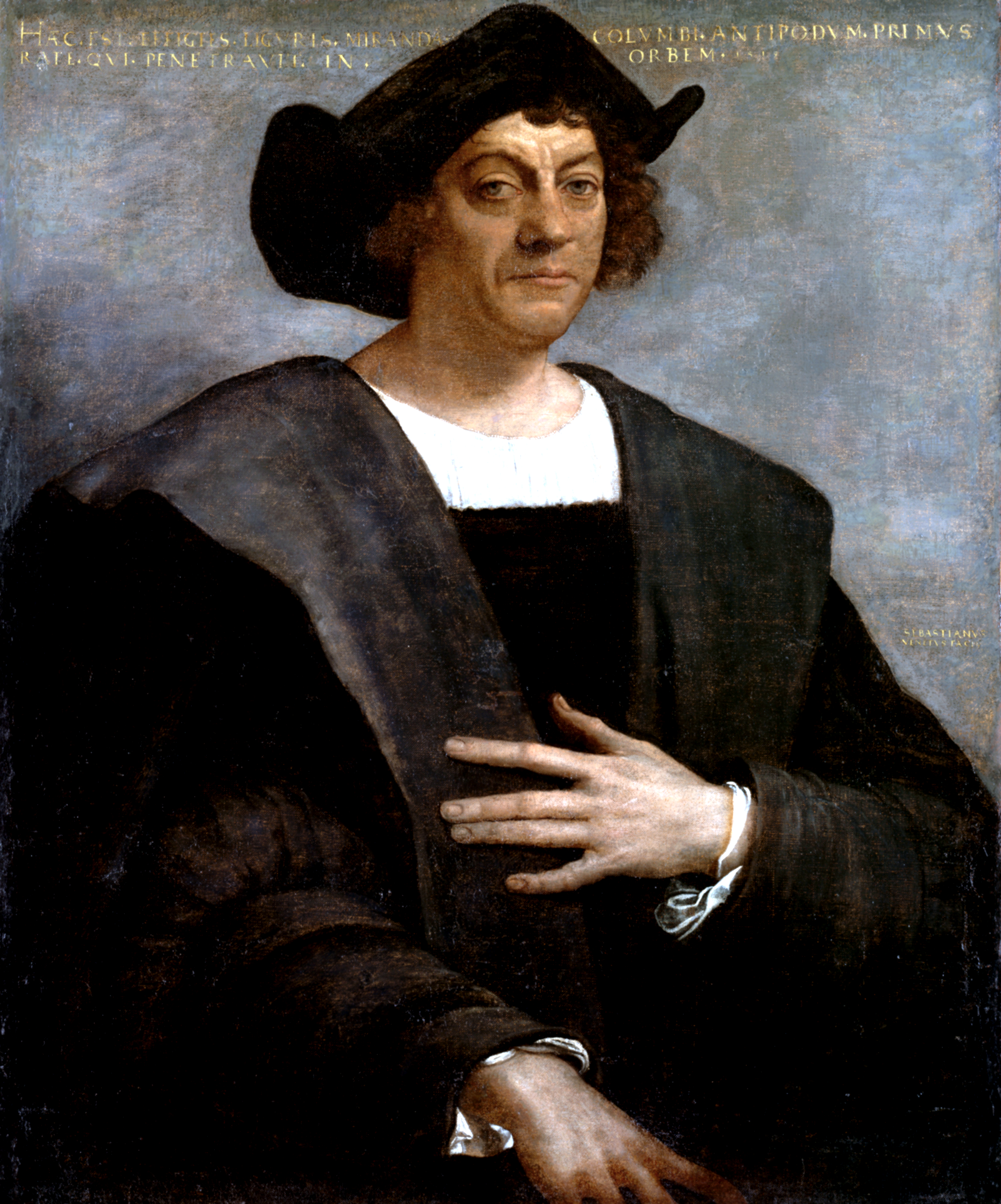
I remember back in fourth grade our teacher told us the truth about Columbus--that he wasn't the nice man who befriended the Indians and helped them take a step towards a more structured and modern society. We learned that he was a corrupt man who ransacked the Indians and stole their gold, but in my opinion I don't see him as a villain. During the time period this was normal. He might've been the first to travel to what he thought was India in 1492 and ended up discovering a new land altogether, but he wasn't the only one who treated them badly. The Spanish conquistadors also raided the New World and caused the extinction of Indian tribes throughout the land. Hernan Cortes was responsible for the entire downfall of the Aztec Empire. Columbus might've been the first to actually attempt to change and cause indirect ruin to the Indian tribes, but he wasn't the last. Spain's main goal during their voyages to the New World was Gold, Glory, and God. They were to get gold at all costs, bring back the glory of conquering land to Spain, and spread their religion to all they found, even if the natives didn't want to be converted. France also followed after their example along with other European nations. They wanted the new land that was up for grabs in the New World, despite it already being occupied. At least Columbus hadn't purposely sailed to the Americas in order to steal their gold and overpower the natives. The other conquering nations were blinded by their greed, the White Man's Burden, and their thirst for power. Some say that Columbus was a villain, but to a much greater degree he should be considered a hero. After all, he was the one who discovered the Americas. Although what came after their discovery wasn't the best part of history, America would have been lagging even farther behind in society without it being discovered. Eventually it would have been discovered, but the creation of its own nation and society would have been delayed by who-knows-how-many-years. The American revolution might not have happened in the year 1700 and the industrial revolution would have been thrown off. Everything we know today would be different if not for Columbus's successful failure in finding the land in 1492. I don't agree with Columbus's ways, but I consider him a hero for finding America when he did, even if by mistake. Without him, America wouldn't be the same nation is it today.

Tuesday, October 7, 2014

LAD #9


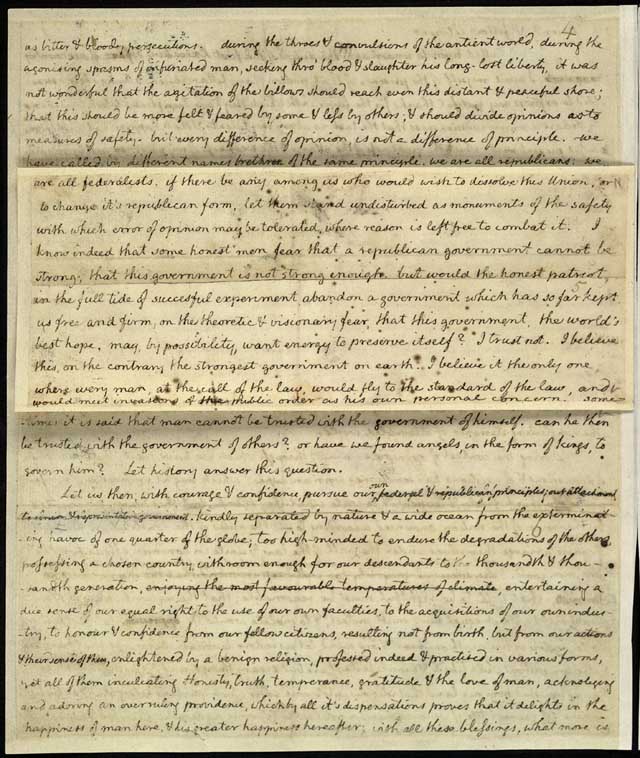
Jefferson starts his address by saying how he alone was not able to govern the country that was the United States of America. Although he had his problems with it and was upset over the loss of the Articles of Confusion, he declared that he would use the Constitution to the best of his ability in order to be a thorough President. Jefferson also declares that he wishes the United States to become just that--united. He wanted them to get past the differences, disagreements, and difficulties they'd had in the past in order to have a clear view towards the future. Jefferson truly believes and shares with the people that Republicanism is the next great step the country needs to take. He continues saying how it will help the people govern themselves. He shares his views on America in its success and lists all the policies that will help lead to success. Jefferson asks that the people be patient when it comes to governmental decisions, for he is only human and it will take time for him to complete these difficult tasks; but nevertheless, he intends to have them completed at one point or another. He nears the end of his speech by stating that he will give up his seat of power whenever the people wish him to since he is a strong believer in the power of the American people. He states that he wants the government to represent the will of the people and hopes to one day grasp the success of a full united and realized America.

Wednesday, September 24, 2014

LAD #7: Washington's Farewell Address

Washington, after his second term as President of the United States, decides to step down from his title and return to a calmer lifestyle. Although the public had voted for him to stay another term, he humbly declines the offer. He urges the American people to make a decision based off of the other promising candidates and wants them to do him the justice of maintaining the importance in leadership of the United States of America. He also states that he wants them to be careful of the emerging political parties in fear of them dividing the united America. He believed that in order for the nation to be as successful as it possibly could be, it would have to stay in agreement and therefore united together no matter what. He stated that maintaining a neutral stance when it came to outside wars was important so they wouldn't make enemies that may hurt them in the future. Washington wanted the American people to abide by the rules of the Constitution and thanked them for the opportunities they'd given him over the past two terms as President of the United States.

LAD #6: Washington's Proclamation of Neutrality

War has been initiated between Austria, Prussia, Sardinia, Great Britain, and the United Netherlands, America is to stay neutral during the war. America will not become involved in the conflict and will instead watch from a distance while the feud is settled outside of their power. All citizens of the United States are to avoid breaking the agreement to stay out of the war (neutral). If any citizens go against staying neutral and do aid other countries in their fight against another in the war, they will no longer be allowed protection under the United States of America. Persecutions among people who break neutrality have already been set in place, so this is simply a warning to the citizens to truly stay out of the matter. They must respect that this is not their battle to fight, and therefore will be punished if they forget that simple fact. Washington has already signed off on the agreement to remain neutral during the war, a document he signed in Philadelphia on April 22nd, 1793.

LAD #5: Federalist

1.  Why are factions so difficult to eliminate?
Factions were difficult to eliminate because by taking them away, liberty would also be eliminated. All people have their rights to life, liberty, and the pursuit of happiness. Government cannot take away a person's liberty. Also factions are formed from people's opinions. Passion is very difficult to erase, especially if it resides in a large number of people. The government would have trouble containing that many people who feel so strongly about their factions. Eliminating them would be a challenge greater than they could handle.


2.  If factions cannot be removed then how can they be controlled?
In order for factions to be controlled, the point of what they're trying to protest needs to be contained. If the government has control over the issue, than the faction can't change anything over their disagreeing problem. Or if everybody has the same opinion over the matter, than everyone would agree and there would be no need for a faction.

Sunday, September 21, 2014

Republican Motherhood Blog

(1) What role did the Revolutionary War play in the transformation of housewifery to Republican Motherhood?
Women served their country now by training good citizens and enlightened legislators. She shows the young and those in need of guidance knowledge to use throughout their lives (doc. A). Families were left in the hands of the women to train and better the young minds of tomorrow. Women were now actually impacting the future of America, being given the task after the Revolutionary War secured America's independence from Britain. They teach their sons about liberty and government (doc. B).


(2) What were the consequences of Republican Motherhood on women?
Although women were given the responsibility of educating their sons (doc. B), they were still stuck on staying in their homes and not interfering with everyday life like men did. Even though their jobs were a lot more important in the long run, their education and chances of learning came with a price. They couldn't leave their homes and became the ladies of the house. They were to watch their husbands and other men go out and practice their rights as men while the women were doomed to stay indoors and teach their sons all they needed to know about life, liberty, and the pursuit of happiness. They were given more opportunist in society by teaching their sons, but what was the point if they were still, in a sense, typical housewives?

(3) What is the significance of the ideology of the Republican Motherhood as a stage in the process of women's socialization?
Women were finally given a real role in society by becoming part of the Republican Motherhood. Before they were only housewives, but now they were something more. They were important. Being a Republican Mother meant bettering the "generous youth, just ripening into manhood," with Republican knowledge (doc. C). They became important pieces of the puzzle that was society, despite still being trapped in a solely male-dominant world. Women were brought together and were given hope that change was coming for the better.

(1) Describe the setting.
Just after the American Revolution. The portrait was painted by Charles Willson Peale in 1789 and depicts a mother and her children. The piece's official name was Mary Gibson Tilghman and her sons. The mother, judging by her clothes and ability to afford a portrait in the first place, appears to be of middle class descent.

(2) Who serves at the center of the portrait and why? How does the woman look? How is she "republican" rather than aristocratic?
In the center of the portrait is Mary Gibson. She looks strong, yet conserved. She had her hands protectively over her child as if to show that she's going to protect the two of them no matter what. She's not dressed completely wealthy or over the top and is around middle class stature, as stated in the question before. It shows that she is a conserved Republican rather than an aristocrat who would gladly show off her wealth for all to see.


(3) What values do her sons exhibit?
Their sons seem to listen to their mother because she's got them on her lap, which seems exceptionally hard for children that young. Especially since painting a portrait could take hours as opposed to taking a simple picture with a camera or cell phone like we do in modern times. Her sons seem to respect their mother and obey her wishes.

(4) Is there a significance to the position of Mrs. Tilgham's arm?
She's holding her child delicately with her arm, keeping him protected from the rest of the world. It shows that she's a force to be recognized and that her son should understand how strong his mother is. She shows her children that she's the one in charge as both a Republican Mother and his teacher. She teaches him to understand society and the world he's going to one day be a part of.